What We Do
BloomlyGen works to develop the new generation into aware and responsible digital citizens through media literacy. To turn this goal into reality, we aim to make media literacy accessible to everyone as a form of public awareness education.
In the 1920s, when cinema, radio, and later television were gradually becoming popular in society, the role played by families and social structures in guiding the younger generation has become one of the most important directions for us in today’s context.
In the present context, the various experiences, concerns of parents, and the challenges faced by children, adolescents, and young people in the media do not escape our attention. The work of BloomlyGen is to understand and analyse these real-life experiences and to create pathways for learning from them—an initiative that is fundamentally grounded in media literacy.
BloomlyGen believes that media is a powerful tool for entertainment, information, and education. Therefore, rather than distancing ourselves from the media environment, our goal is to find new solutions to emerging problems from within this very environment—so that the new generation can move forward in the digital world in an aware, safe, and critically thoughtful way.
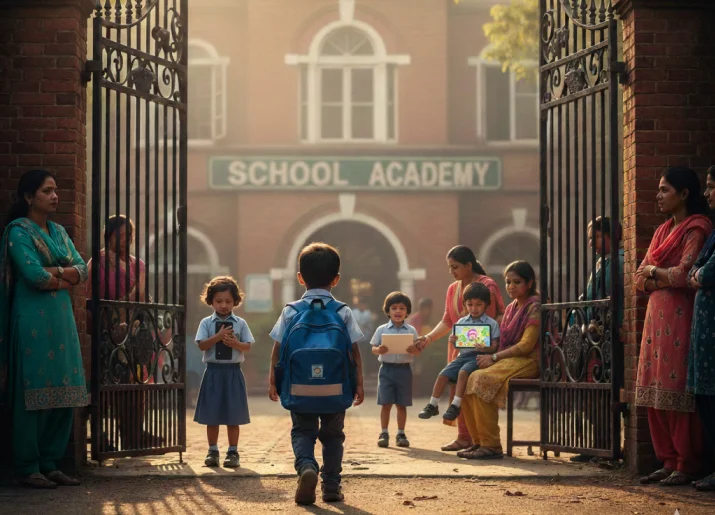
Anyway, after enrolling my son in school in 2019, my idea began to take shape in my mind, and from that point onward, I felt a strong urge to work on it. However, the truth is that even when I shared it with others, it did not receive much attention. I myself was not fully clear on how to start. Listening to the issues discussed in monthly parent-teacher meetings and the advice of teachers, I began to study the matter seriously. I tried to understand the situation in other countries and observe how they were approaching it. The idea gradually evolved around the concept of digital parenting.
Anyway, in trying to align my office hours with my son’s school schedule, we had to change schools three times—from nursery to first grade! I wanted to bring these parents together in one place. After enrolling him in second grade at the fourth school, I created a Facebook page called Projukti Path. The purpose was to unite these parents, understand their experiences, and help others understand them as well. I thought that through these shared experiences, we could find many solutions. But it was not that simple. The response was very low. Interestingly, they were sharing or wanted to share their problems with me personally, but did not want to post them on the page! I realised that they felt a certain hesitation and preferred to keep these matters somewhat private. Even though everyone’s daily experiences were more or less similar, they were reluctant to share them publicly.
Subsequently, I wanted to create some content with awareness messages. However, it was entirely based on my own ideas and assumptions. That was not how I wanted it to be. My main objective was to identify problems through real-life experiences, explain them accordingly, and create and share messages based on those insights.
Considering the situation, organisations like the World Health Organisation, UNESCO, the American Academy of Pediatrics (AAP), and many others have issued various rules and guidelines. But simply placing a child within the framework of these regulations—does it truly provide any meaningful guidance? Or can it? For this reason, alongside the policies, having knowledge of real-life experiences allows us to understand our child’s psychology and create a flexible framework tailored to them.
Then, in July 2024, I was observing the uncompromising nature, pent-up frustration, and anger of the younger generation. I also noticed the urge to express a bloody uprising in new words and languages while simultaneously making the movement’s platform media-friendly. Similarly, I observed that during the impeachment of South Korea’s President Yoon Suk-yeol, the nature of youth protests in that country was almost the same. I also saw that Gen Z movements across Africa, Asia, and the Middle East are generating new social and political tensions, with young people challenging military or governmental policies in pursuit of fair education, employment, political participation, and power.
Over time, at this stage, I was able to easily connect my initial observations with the context of 2024. The youth of 2024 are the first generation to grow up using social media, mobile phones, and various gadgets from childhood. Therefore, I realised that I must first understand this ‘generation’—their behavior, cultural characteristics, and forms of activism. These messages need to be spread among parents, and also among all of us who, in our daily lives—whether for work, leisure, necessity, or even without necessity—have become accustomed to using various forms of new media. This will create a broader conversation around the issue, bringing out more nuanced aspects. Through this, the new generation of parents will become better informed about the ways and methods to guide the little children in their homes.
We need to bring this to the attention of experts. Their large-scale, organised research on the subject will serve as a guide for our future path. And most importantly, it must be brought to the attention of the authorities, so that they can disseminate various awareness messages focused on this issue in society, impose necessary regulations, and formulate relevant laws.
Because in a democratic country, media literacy is essential for keeping citizens aware and active. BloomlyGen is working effectively to achieve this goal.